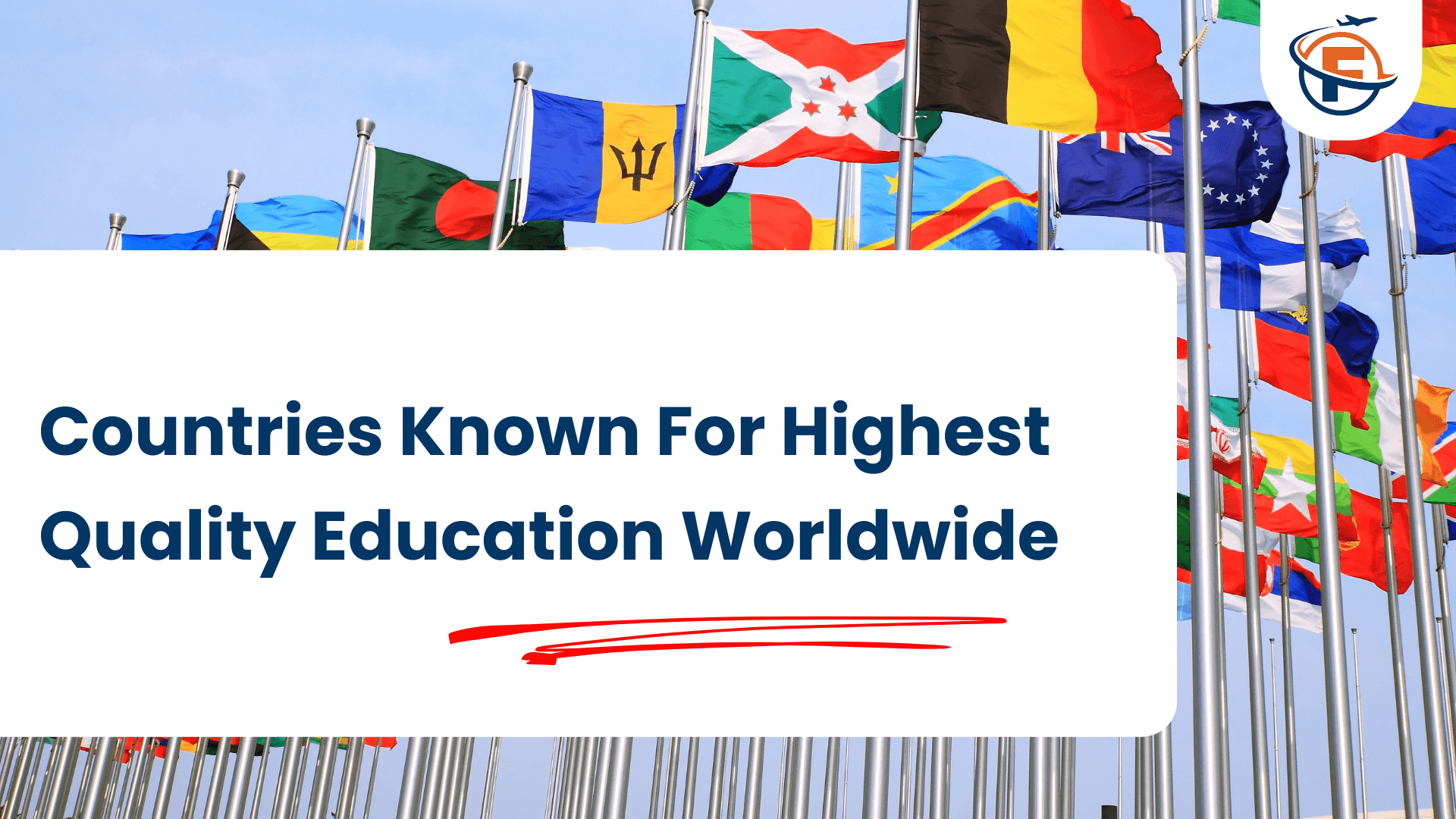
When students ask me, “Which country has the best education system?” I usually pause before answering.
Because the truth is – there is no single “best” system for everyone.
What works brilliantly for one student can feel overwhelming or mismatched for another. Some countries value discipline and structure.
Some encourage questioning and debate. Some focus heavily on research, while others prepare you directly for jobs.
Still, year after year, certain countries keep appearing in conversations with students who do well academically and professionally.
Not because of marketing – but because their education systems consistently deliver.
This list is based on years of global rankings, government spending on education, university standards, research output, and most importantly, student outcomes.
Table of Contents
ToggleSo, what actually makes an education system strong?
In simple terms, a good education system usually has :
- Universities that are trusted globally
- Teachers who encourage thinking, not memorising
- Courses that connect to real careers
- Reasonable access for international students
Safety, structure, and long-term value
With that in mind, let’s talk about the countries that stand out in 2026.
Top 10 Countries with the Best Education System (2026)
| Rank | Country | What students experience there |
|---|---|---|
| 1 | South Korea | Extremely high academic standards, strong STEM focus |
| 2 | Denmark | Free education, practical learning, student freedom |
| 3 | Netherlands | English-taught degrees, research + applied balance |
| 4 | Germany | Low tuition, world-class public universities |
| 5 | Finland | Stress-free learning, deep understanding |
| 6 | Japan | Technology-driven education, strong research |
| 7 | Canada | Quality education with clear work & PR paths |
| 8 | Ireland | English-speaking EU country, industry-focused |
| 9 | Norway | Safe, high-quality education, public funding |
| 10 | Malta | English education, EU recognition, affordability |
Why these countries keep coming up – Year After Year
South Korea
South Korea’s education system is intense. There’s no sugar-coating that. Students work long hours and competition is real.
But the outcome is equally real – strong foundations in science, math, and technology.
Universities like KAIST and Seoul National University are respected worldwide, especially for engineering and research-heavy careers.
Denmark
Denmark believes education should prepare you for life, not just exams.
Students are encouraged to question teachers, work in groups, and solve real problems.
Public universities are funded by the government, which means tuition is either free or very low.
It’s one of the few systems where learning feels practical, not pressured.
Netherlands
The Netherlands quietly became a favourite among international students.
Why? Because you can study in English without compromising on quality.
The system gives students a choice – research universities if you enjoy theory, or applied sciences universities if you prefer hands-on learning.
Germany
Germany doesn’t advertise loudly, but its education speaks for itself.
Public universities charge little to no tuition, research standards are extremely high, and degrees carry serious global respect.
Engineering, automotive, IT, and applied sciences are where Germany truly shines.
Finland
Finland’s system feels very different from most countries.
Fewer exams. Less stress. More focus on understanding concepts properly.
Students aren’t rushed – and surprisingly, outcomes are still excellent.
It’s ideal for students who want quality education without constant academic pressure.
Japan
Japan combines discipline with innovation.
Universities focus heavily on technology, robotics, AI, and engineering. Research funding is strong, and the country invests heavily in future-facing industries.
It’s demanding, but for the right student, extremely rewarding.
Canada
Canada gets many things right at once – good universities, welcoming policies, and clear post-study work options.
Students don’t just study and leave; many build long-term careers there.
That balance makes Canada one of the safest education choices globally.
Ireland
Ireland offers something unique – an English-speaking education system inside the European Union.
Universities have strong links with global tech and pharmaceutical companies.
For students who want international exposure without a language barrier, Ireland fits naturally.
Norway
Norway believes education should be accessible.
Public universities have historically been tuition-free, and even with recent changes, quality remains high.
Students benefit from a safe environment, excellent living standards, and globally respected degrees.
Malta
Malta may surprise some people on this list – but it deserves its place.
The education system follows a British model, classes are taught in English, and degrees are recognised across Europe.
For students looking for affordable EU education, smaller class sizes, and a smoother cultural transition, Malta is steadily becoming a smart choice.
So… Which Country has the Best Education System?
Honestly? The best education system is the one that fits you.
- If you want low tuition and strong academics – Germany
- If you want English education with career flexibility – Canada or Ireland
- If you want EU exposure without high costs – Malta
If you want discipline and technical depth – South Korea or Japan
Rankings can guide you, but they should never decide for you.
Final Thoughts
Education isn’t just about where you study.
It’s about how that system shapes you – your thinking, confidence, and future choices.
Countries with strong education systems don’t just produce graduates.
They produce people who know how to learn, adapt, and grow.
Students Also Ask
There is no single answer that fits everyone. Based on global rankings and outcomes, countries like South Korea, Denmark, Germany, Finland, and the Netherlands consistently perform at the top. However, the “best” system depends on what a student values – affordability, teaching style, job outcomes, or research exposure.
Yes. Germany remains one of the strongest education systems globally, especially for engineering, technology, and applied sciences. Public universities charge little to no tuition, and German degrees carry strong international recognition.
Finland focuses on deep learning rather than exam pressure. Fewer tests, highly trained teachers, and equal access to education make its system unique. Students are encouraged to understand concepts instead of memorising content.
Yes, especially for students looking for English-taught education within the European Union. Malta follows a British-style education system, has affordable tuition compared to other EU countries, and offers degrees recognised across Europe.
Countries like Germany and Norway are known for low or no tuition fees at public universities. However, students still need to cover living expenses, semester fees, and insurance costs.