Switzerland is not a country students usually decide on in one evening.
It’s a country they arrive at slowly – after looking at rankings, fees in the UK, visa issues in the US, and burnout stories from other destinations.
Somewhere along that process, Switzerland starts to make sense.
But studying here works very differently from what most Indian students are used to.
The education system is decentralised, expectations are academic-heavy, and universities don’t “adjust” requirements just because a student is international.
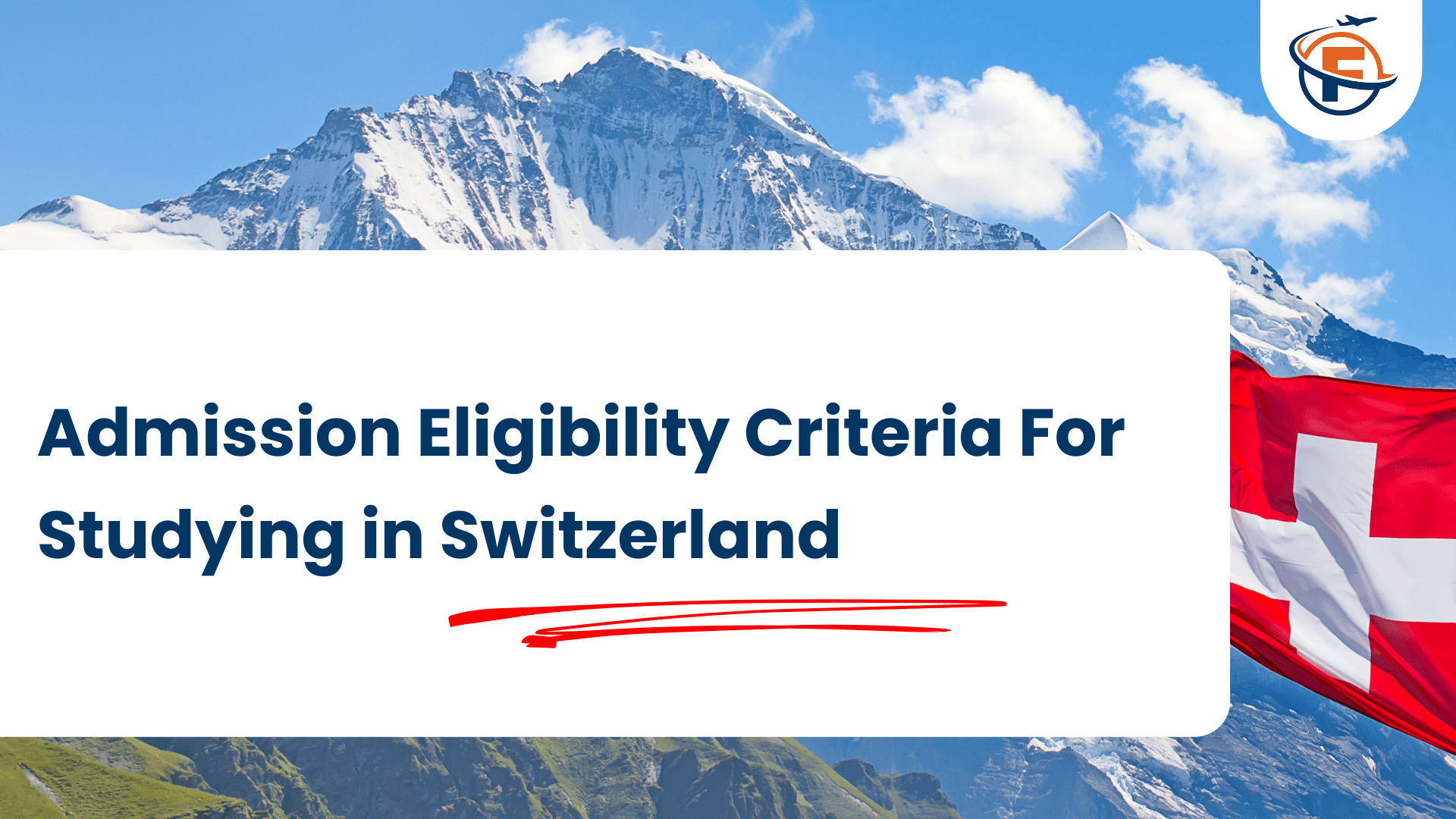
If you’re planning to study in Switzerland in 2026, you need clarity before excitement. This guide is meant for that.
Table of Contents
ToggleWhy Many Indian Students Choose Switzerland
One of the first surprises students have is about fees.
Public universities in Switzerland are not expensive in the way people imagine. They are government-supported, which keeps tuition relatively low – sometimes shockingly low – even for international students.
For example, at some public universities, annual tuition is close to CHF 5,000–6,000. That’s lower than many private colleges in India.
Of course, living costs are high. Switzerland doesn’t compromise there. But academically, you’re paying for quality, not branding.
Students usually choose Switzerland for :
- Strong academic reputation
- Research-focused universities
- Global respect for degrees
- Exposure to multiple European languages
Hospitality, business, engineering, medicine, and life sciences leadership
This is not a destination for shortcuts. It rewards consistency and seriousness.
Basic Eligibility To Study in Switzerland
Swiss universities don’t follow a single admission rulebook. Each university evaluates applicants independently.
Still, the core expectations are similar across most institutions.
Eligibility For Bachelor’s Programs
For undergraduate studies, Indian students must have :
- Completion of 10+2 from a recognised board
- Good academic performance (especially in core subjects)
A qualification equivalent to the Swiss maturity certificate
Some things students don’t realise early :
- Not every school board is treated equally
- Some students may be asked to take additional qualifying courses
A few universities may conduct entrance exams or academic checks
Swiss universities look closely at whether your previous education actually prepares you for their system. If not, they don’t hesitate to say no.
Eligibility for Master’s Programs
For postgraduate studies, universities expect :
- A completed bachelor’s degree in a relevant field
- Consistent academic record
In some programs (especially business or management), GMAT or GRE
Important note for Indian students :
Not every Indian degree is automatically accepted. Degrees from WES-accredited or highly rated institutions are more likely to be recognised. In some cases, universities ask for degree evaluation before confirming admission.
Language Requirements (Very Important)
Switzerland has four national languages. Your course language depends on the university and region.
Many master’s programs are now taught in English, but undergraduate programs often require German or French.
Students are usually asked to submit :
- IELTS or TOEFL for English-taught programs
German or French certificates where applicable
| English | German | French |
|---|---|---|
| EU Business School | University of St. Gallen | University of Geneva |
| Glion Institute of Higher Education | University of Basel | University of Lausanne |
| University of Zurich | University of Lucerne | University of Neuchâtel |
| IMD, Lausanne | University of Bern | University of Fribourg |
Even if your course is in English, knowing a local language helps immensely – especially for part-time work and daily life.
Financial Proof Required
To study in Switzerland, students must show proof that they can support themselves.
On average, universities and visa authorities expect students to show around CHF 21,000 per year. This covers :
- Living expenses
- Accommodation
- Health insurance
Daily essentials
Swiss visa officers are very particular about financial documents. Everything must be clear, genuine, and well-documented.
Top Universities to Study in Switzerland 2026
These universities are popular among international students because of academic reputation and global recognition.
| University | QS Ranking |
|---|---|
| ETH Zurich | 7 |
| EPFL | =22 |
| University of Zurich | 100 |
| University of Geneva | =155 |
| University of Basel | 158 |
| University of Bern | =184 |
| University of Lausanne | =212 |
| USI – Università della Svizzera italiana | =473 |
| Université de Fribourg | 642 |
| Zurich University of Applied Sciences (ZHAW) | 801–850 |
What Students Often Struggle With
Swiss education expects :
- Independent learning
- Strong academic honesty
- Original thinking
- Less spoon-feeding
Strict plagiarism rules
Students coming from very structured systems sometimes find this challenging initially. But those who adapt usually thrive.
Students Also Ask
Yes, especially for students who value academic quality, global recognition, and long-term outcomes.
For English-taught programs, yes. Other programs may require German or French proficiency instead.
Tuition is low at public universities, but living costs are high. Students should plan carefully.
Yes, part-time work is allowed after six months, usually up to 15 hours per week.
Some are, some are not. Degree recognition depends on the university and accreditation.