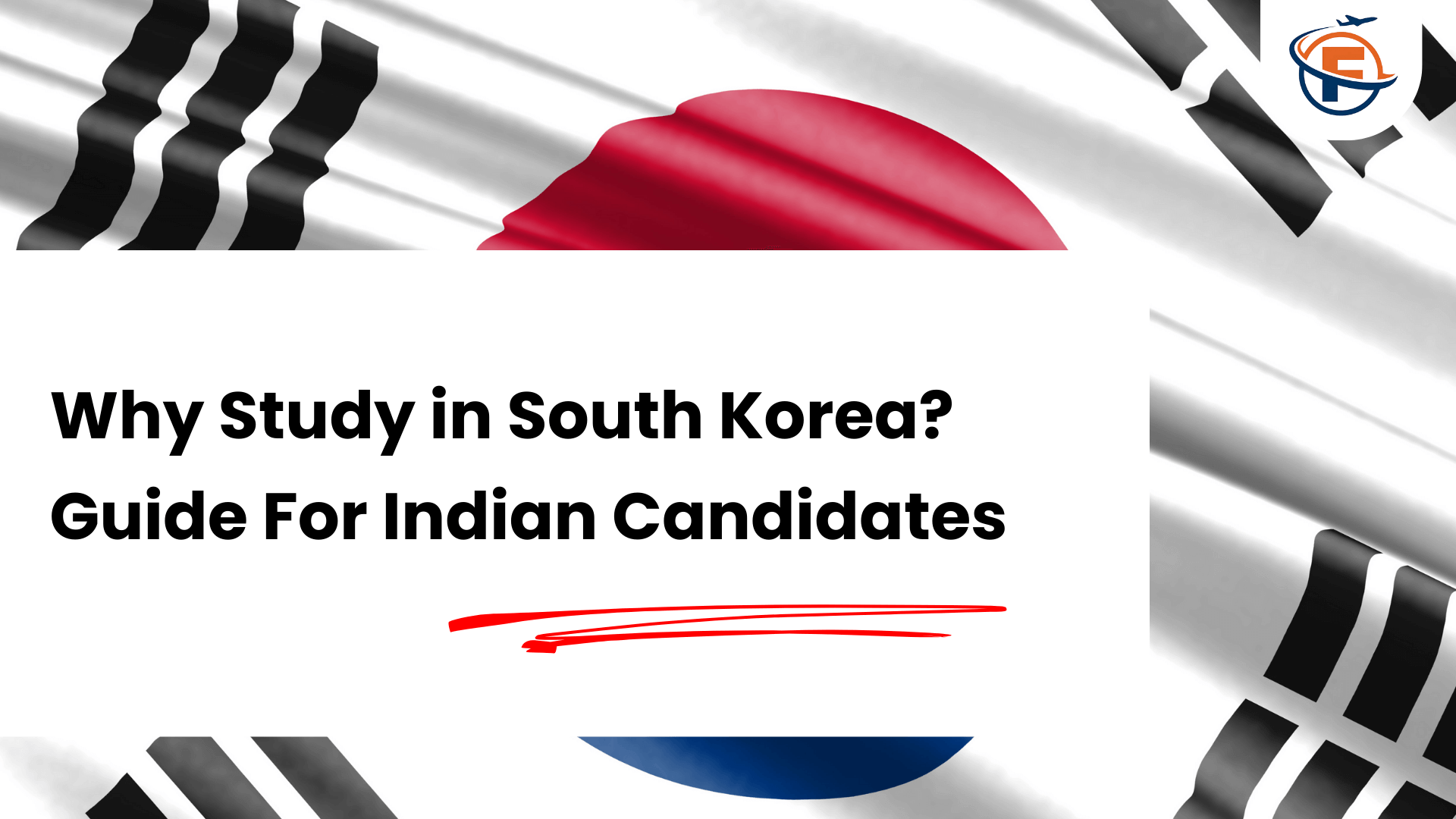
When Indian students think about studying abroad, the first names that usually come up are the US, UK, Canada, or Australia.
South Korea often comes as a surprise option.
Parents ask, “Is Korea really good for studies?”
Students ask, “Will it help my career?”
Over the last few years, I’ve seen a quiet but steady shift. Students who want quality education but don’t want to spend a crore on fees are now seriously considering South Korea.
Table of Contents
ToggleAnd honestly, it makes a lot of sense.
South Korea is not just about K-dramas, BTS, or technology gadgets.
It is one of Asia’s strongest education hubs, with globally ranked universities, strong industry connections, and surprisingly affordable study costs compared to Western countries.
Let’s break this down properly, the way counsellors explain it to students and parents.
Why South Korea is Becoming Popular Among Indian Students
South Korea has built its reputation on education, research, and innovation. Universities here are research-focused, industry-connected, and globally recognised.
Institutions like Seoul National University (SNU), KAIST, POSTECH, Yonsei University, and Korea University consistently rank among the top universities in the world, especially for engineering, science, IT, business, and management programs.
Another big reason students choose Korea is value for money.
Tuition fees and living costs are significantly lower than the US or UK, but the quality of education remains world-class.
English-taught programs are increasing every year, especially at the master’s level.
So students who don’t know Korean can still study comfortably.
At the same time, learning Korean opens doors to better jobs and long-term settlement opportunities.
Top Universities in South Korea For Indian Students
Here are some of the best universities in South Korea along with their global rankings.
| Universities | QS World University Rankings 2026 | THE World University Rankings 2026 |
|---|---|---|
| Seoul National University, Seoul | =38 | =58 |
| Yonsei University, Seoul | #50 | #86 |
| Korea University, Seoul | #61 | =156 |
| Pohang University of Science and Technology (POSTECH) | #102 | =141 |
| Sungkyunkwan University (SKKU), Suwon | =126 | #87 |
| Hanyang University, Seoul | #159 | #251–300 |
| Ulsan National Institute of Science and Technology (UNIST) | =310 | #201–250 |
| Kyung Hee University, Seoul | =331 | #251–300 |
| Daegu Gyeongbuk Institute of Science and Technology (DGIST) | #370 | #351–400 |
| Gwangju Institute of Science and Technology (GIST) | =385 | #401–500 |
Popular Programs and Career-Oriented Courses in South Korea
South Korean universities offer a wide range of undergraduate and postgraduate programs. Most international students prefer STEM, business, and global studies courses.
Popular Bachelor’s Programs
| Field | Courses |
|---|---|
| Engineering | Mechanical, Electrical, Civil, IT |
| Business | Business Administration, Marketing, Finance |
| Technology | Data Science, AI, Robotics |
| Life Sciences | Biotechnology, Medical Science, Environmental Science |
| Social Sciences | Psychology, Sociology, International Relations |
Popular Master’s Programs in South Korea
| Program & University | Duration | Estimated Tuition (USD/year) | Eligibility Requirements |
|---|---|---|---|
| MBA – KAIST, Yonsei | 1.5–2 years | $8,000 – $11,000 | Bachelor’s degree, IELTS 6.5+, GMAT (some), work experience |
| Engineering (Mechanical, Electrical, CS) | 2 years | $6,000 – $15,000 | Engineering degree, IELTS/TOEFL |
| Computer Science / Data Science | 2 years | $7,000 – $14,000 | CS/IT background, IELTS 6.5+, GRE (sometimes) |
| Public Administration – SNU, Korea Univ. | 2 years | $6,000 – $8,000 | Bachelor’s degree, SOP, LORs |
| Global MBA – Korea or Yonsei | 2 years | $9,000 – $13,000 | Bachelor’s, IELTS, GMAT |
| International Studies – Korea University | 2 years | $7,000 – $9,000 | Bachelor’s, GPA 3.0+ |
| Biotechnology / Public Health – SNU, POSTECH | 2 years | $5,000 – $12,000 | Science background, research proposal |
| Media & Communication Studies | 2 years | $6,000 – $9,000 | Arts/Media background |
Eligibility Criteria For Indian Students
Students studying there often work on real research projects and industry collaborations, which makes their degree much more valuable in the job market.
Eligibility to Study Bachelor’s in South Korea
| Criteria | Requirements |
|---|---|
| Academic | 12th grade with minimum 70% marks |
| Language Proficiency | IELTS 6.0+ / TOEFL 80+ (English programs), TOPIK Level 3–5 (Korean programs) |
| Documents | Transcripts, SOP, 1–2 LORs |
Eligibility to Study Master’s in South Korea
| Criteria | Requirements |
|---|---|
| Academic | Bachelor’s degree with 70% marks or CGPA 7.0+ |
| Language Proficiency | IELTS 6.0+ / TOEFL 80+, TOPIK Level 3+ (for Korean programs) |
| Documents | Degree certificate, transcripts, SOP, 2–3 LORs, research proposal (if required) |
Intakes and Deadlines in South Korea
| Intake | Application Period | Semester Start |
|---|---|---|
| Spring Intake | September – November | March |
| Fall Intake | March – May | September |
Scholarships For Indian Students in South Korea
South Korea offers generous scholarships. Some cover full tuition, living costs, and even airfare.
Government Scholarships
| Scholarship | Coverage | Eligibility |
|---|---|---|
| Korean Government Support for Self-Financed Students | ₩500,000 per month for 1 year | Excellent academic record |
University Scholarships
| University | Scholarship Name | Coverage | Eligibility |
|---|---|---|---|
| Seoul National University (SNU) | SNU President Fellowship | Full tuition + stipend | High academic scores & research background |
| KAIST | KAIST International Scholarship | Full tuition + stipend | Strong academics & research experience |
| POSTECH | POSTECH Scholarship | Full tuition + research grant | Research-focused programs |
| Yonsei University | Global Leaders Scholarship | 50–100% tuition | High GPA & leadership qualities |
Corporate Scholarships
| Company | Scholarship Name | Coverage |
|---|---|---|
| Samsung | Global Scholarship | ₩1,500,000/month + full tuition |
| POSCO | Asia Fellowship | ₩1,000,000/month + full tuition |
Cost of Studying in South Korea
| Category | Cost |
|---|---|
| Tuition Fees | Public: $2,000 – $4,500/semester Private: $4,000 – $8,000/semester |
| Accommodation | $300 – $600/month |
| Food & Transport | $300 – $500/month |
| Miscellaneous | $100 – $200/month |
| Total Estimated Cost per Year | $8,000 – $15,000 |
Korea Student Visa (D-2 Visa) Overview
The D-2 Student Visa is for international students enrolled in full-time degree programs or exchange courses longer than 90 days.
The visa is initially valid for 3 months and can be extended during your study period.
After graduation, students can apply for job-seeking and work visas.
Career Opportunities After Studying in South Korea
South Korea is home to global giants like Samsung, LG, Hyundai, SK Group, and many tech startups. Graduates find opportunities in :
- IT and Artificial Intelligence
- Engineering and Manufacturing
- Biotechnology and Healthcare
- Finance and Business Consulting
Research and Academia
Average Monthly Salaries in South Korea
| Industry Sector | Average Monthly Salary (KRW) |
|---|---|
| Architecture | ₩ 3,610,000 |
| Banking | ₩ 4,230,000 |
| Construction | ₩ 2,290,000 |
| Engineering | ₩ 3,280,000 |
| Manufacturing | ₩ 2,650,000 |
| Healthcare | ₩ 5,800,000 |
| HR | ₩ 3,680,000 |
| Public Relations | ₩ 3,910,000 |
| Real Estate | ₩ 4,400,000 |
| Teaching | ₩ 4,120,000 |
Advantages of Learning Korean Language
Students with TOPIK Level 4 or higher get better job opportunities, higher salaries, and easier long-term residency options. Many companies prefer bilingual candidates.
Final Thoughts
South Korea is no longer just a hidden study destination. It is becoming one of the smartest choices for Indian students who want quality education without extreme costs. With world-ranked universities, generous scholarships, strong industry links, and a modern lifestyle, Korea offers a balanced mix of education, career growth, and cultural exposure.
For students who are willing to explore Asia beyond traditional destinations, South Korea can be a powerful stepping stone for global careers.
Students Also Ask
Yes. South Korea offers globally ranked universities, affordable tuition, strong scholarships, and good job opportunities. Indian students also find the culture safe and student-friendly.
Yes. You can work part-time up to 20 hours per week during semesters and full-time during vacations with permission.
Not always. Many programs are taught in English. However, learning Korean improves job prospects and daily life.
Yes. Many countries offer a pathway from student visa → post-study work → skilled job → PR. The best examples are Canada, Australia, Germany, Ireland, and Netherlands.